

StartEngy SRL is an innovative startup founded in 2021 by 2 engineers and an industrial chemist, focused on the circular economy. Two private investors and two companies subsequently joined the project through several capital increases.
The operational headquarters is located in L'Aquila at the Tecnopolo d'Abruzzo where the company has rented part of a warehouse of about 350 m2
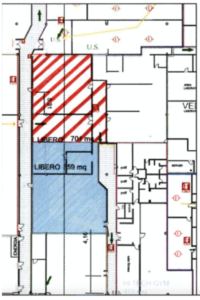
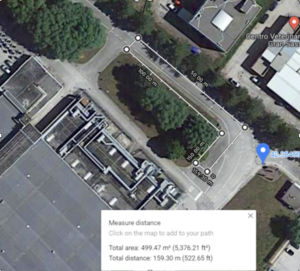
and has been granted the use of an adjacent, unused outdoor area of about 500 m2
Advantages of the Tecnopolo d'Abruzzo
- Collaboration with innovative startups and laboratories located in the Tecnopolo d'Abruzzo
- Collaboration with the University of L'Aquila
The Project
The innovation project consists in the development of very-low-environmental-impact processes and products essential for greenhouse cultivation; the greenhouses will be built with recyclable materials, be energy self-sufficient, and be fed with recovered water and fertilisers made from recovered materials. In addition, an innovative mobile inspection robot, also usable for greenhouse cultivation, will be developed.
For this project, Startengy will implement an innovation management system according to the guidelines of the international standard ISO 56002:2019 "Innovation management – Innovation management system – Guidance”.
The S.I.R.E.F.A. project (Integrated System for Waste, Energy, Fertilisers and Agriculture) involves
the innovation of low-environmental-impact processes and products:
1) Recovery of substances from waste useful for the production of fertilisers without using products of the synthetic chemical industry;
2) Introduction of new fertilisers with characteristics not currently on the market, formulated to customers' needs;
3) Greenhouse cultivation according to the principles of the circular economy, with energy autonomy achieved through the use of Renewable Energy and a productivity sufficient to guarantee its economic sustainability;
4) Qualitative improvement of plant-based foods by growing plants without the use of
herbicides and insecticides in hydroponic and aeroponic greenhouses
5) Use of inspection robots both for precision agriculture and for complex hazardous environments.
6) Carbon fertilisation using part of the CO2 leaving the cogenerator
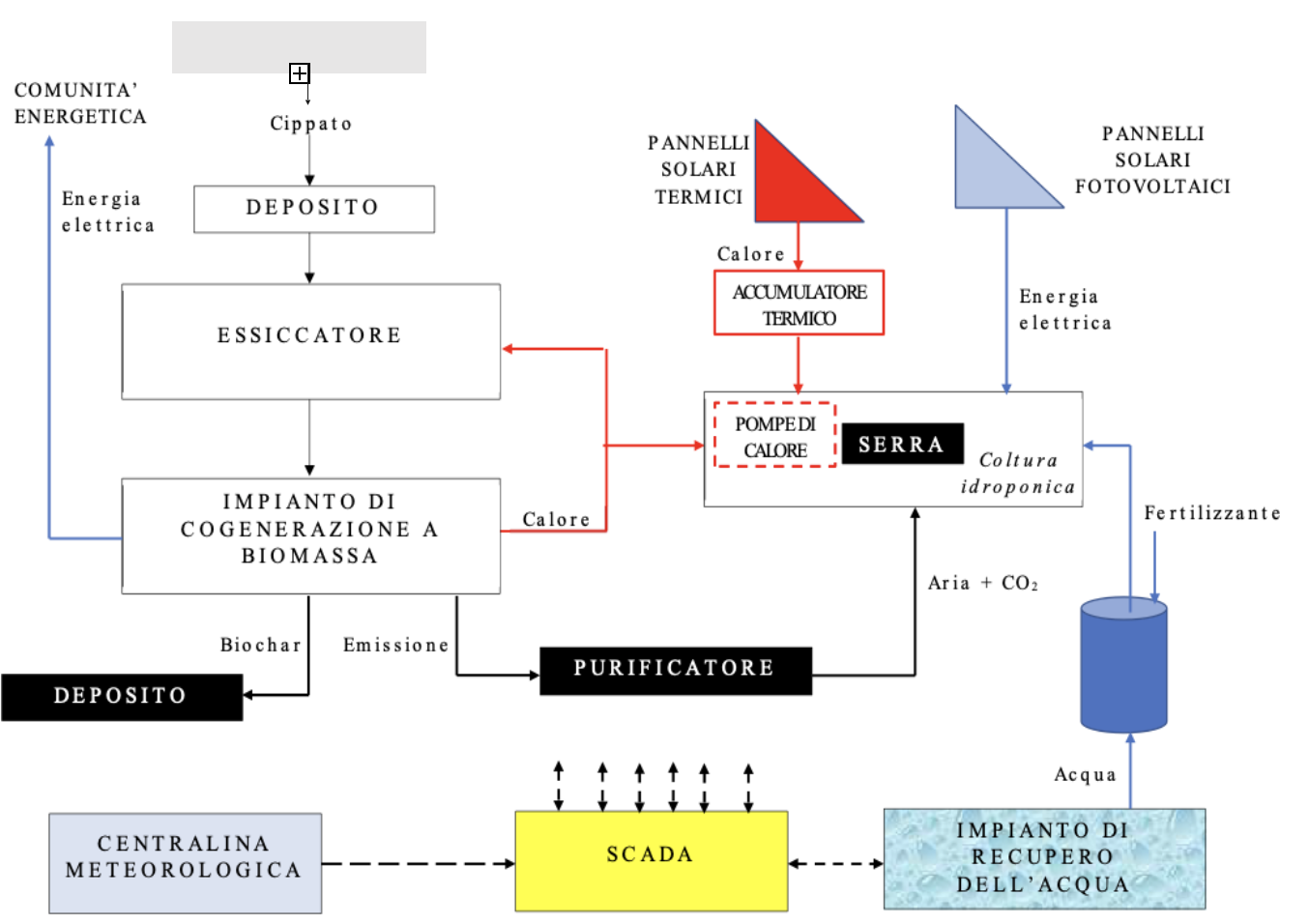
Innovative elements of the project in precision agriculture
Application of the principles of the circular economy
- Production of fertiliser from substances recovered from waste;
- Use of easily recyclable materials for the construction of the greenhouse (iron, wood, glass, expanded clay).
Energy self-sufficiency
- energy management system equipped with artificial intelligence.
- biomass tri-generation plant and/or geothermal plant;
- solar thermal panels with heat storage
- photovoltaic solar panels with electric storage;
- Insulation and energy efficiency
Water self-sufficiency
- rainwater recovery;
- recovery of the humidity produced by the plants;
- water management system equipped with artificial intelligence.
Climate Change Mitigation
- no landscape impact (windbreak barrier on at least 50% of the site)
- use of waste as a liquid soil improver.
- carbon fertilisation through the purified emissions of the biomass-gasification tri-generation plant.
carbon fertilisation management equipped with artificial intelligence
Quality and traceability of the cultivation products
- Sealed facilities, without significant exchanges with the external environment
- Use of biological pest control
- Traceability system (patented)
- No plant protection products
Software and Hardware development
- Mobile robots
- for transport
- for inspection
- Manufacturing Execution System (MES) equipped with artificial intelligence.
Social and Territorial Benefits
Article 11-bis of the Energy Decree ((Conversion and increase in the energy efficiency of greenhouse facilities) provides for the drafting of the National plan for the conversion of production structures of the national greenhouse stock into agro-energy sites to encourage the conversion of such structures for their efficient reuse.
Some objectives of this plan:
-
-
- Construction of protected structures designed to ensure their environmental sustainability and agronomic efficiency;
- Use of renewable energy for crop and climate management, supporting investments to reduce the impact of agricultural activities on the environment;
- Transformation of greenhouse facilities from energy-consuming structures into energy production and sharing structures, making the facilities themselves producers of the energy needed for their own operation;
- Resilience of greenhouse facilities to climate change;
- Recovery of rainwater from the roofs of greenhouse facilities;
- Development of low-enthalpy geothermal plants;
- Spread of heating and cooling systems, including district heating from biomass conversion and biogas plants;
-
Expected Results
- Development of a food supply system at zero kilometres and of high quality, all year round.
- Possibility of economic development of the inland areas of Abruzzo, which are climatically disadvantaged, towards new types of crops.
- Reuse of disused industrial areas and warehouses.
- Contribute to the achievement of the environmental objectives of the Abruzzo Region, in terms of pollution reduction, improvement of ecosystems and reduction of water consumption.
The project was submitted to the Next Appennino EU call – "Call B1.3.B – SME INNOVATION" in L'Aquila

NextAppennino is the programme for the economic and social revival of the Central Italy regions hit by the 2009 and 2016 earthquakes, funded by the Complementary Fund to the NRRP for Earthquake Areas, with a total allocation of 1 billion 780 million euros
The project was a winner, entering the final ranking of eligible applicants. The project totals 2.5 million euros, funded at 50%; we are looking for funds to reach the necessary budget.
- TITLE: SIREFA – Integrated System for Waste, Energy, Fertilisers and Agriculture
- DURATION: 18 months.
- PLANNED INVESTMENT: €2,500,000.
- Funding: 50% non-repayable grant